Saturday, 22 September 2012

0 Lakshmi-Pujan


Diwali is the most loved festivals of Hindus. It is the bringer of prosperity, wealth and good luck.

In India Diwali is the festival of Laxmi, the Goddess of prosperity and wealth. It is believed that Goddess Laxmi visits everyone during Diwali and brings peace and prosperity to all. On the night of Diwali  "Lakshmi-Pujan" is performed in the evenings. A traditional Pujan is performed after sunset in all the homes.

Five pieces of ghee diyas are lit in front of the deities, naivedya of traditional sweets is offered to the Goddess and devotional songs are sung in praise of Goddess Laxmi. After Deepawali Puja people light diyas (lamps) in their homes to usher in light and clear the darkness from the world. 


On this day, Goddess Lakshmi and Lord Ganesh are worshipped with great devotion and care. Generally, it is at night that the puja is performed. People collect all the puja items and lit up rows of diyas and candles for the puja. The puja is done to remove darkness and to usher in light of hope, knowledge and devotion. So, let us learn the perfect Diwali Pujan VIdhi.

Lakshmi-Pujan Vidhi;

First of all the puja room is cleaned. Then the idols of lord Ganesh and Lakshmiji is washed with water. Then, the idols are washed finally with the water of River Ganga for ultimate purification.

Both the gods are dressed in new bejeweled clothes and placed on their 'asana'. Lord Ganesha is placed on the right side and Lakshmiji on the left.

Then, they are offered flowers and garlands are out over them. The diyas are lighted and put in front of the deities.
 
Essentially, people light five diyas and five candles also. They light incense sticks too. "Panchamrit" is made from honey, milk, curd, sugar and ghee.

Then, 'mithais' or Diwali sweets are offered coupled with some other delicacies. With this, abir, sindhoor and haldi are also poured over the deities.

Finally, fruits and "dakshina" or cash money is offered too.

Ganesh aarti is sung accompanied with Diwali aarti for Laskmiji. And the plate of the diyas is circled around the deities.
 
Laxmi Pooja is Place Lotus and other flowers at her feet as an offering. A silver coin is placed in front of the Goddess during the puja. Now perform Aarti with flowers in hand  the general Aarti called “Om Jai Jagdish” is also sung.
      
After the aarti is finish, After Deepawali Pujan have the Prasad and go out to burst Diwali Crackers.


1 When is Diwali 2015?

Diwali Calendar

According to Hindu calendar, the date of Diwali falls in either in October or November each year, depending on the cycle of the moon.  

Each year on the dawn of Ammavasya in the month Kartik the festival of Diwali is celebrated.

The festival actually runs for five days, beginning with Dhanteras, although the main celebrations happen on the third day.

             Diwali 2015
November 11th, 2015


In 2015, Diwali on Wednesday, November 11th


09 November, 2015 - Dhanteras
10 November, 2015 - Choti Diwali / Kali Chaudas / Naraka Chaturdashi
11 November, 2015 - Main Deepavali / Baddi Diwali (Lakshmi Puja)
12 November, 2015 - Padwa & Govardhan Puja / Pratipat
13 November, 2015 - Bhai Duj / Bhhaya Dooj / Bhai Beej

0 When is Diwali 2014?

Diwali Calendar

According to Hindu calendar, the date of Diwali falls in either in October or November each year, depending on the cycle of the moon.  

Each year on the dawn of Ammavasya in the month Kartik the festival of Diwali is celebrated.


The festival actually runs for five days, beginning with Dhanteras, although the main celebrations happen on the third day.

       Diwali 2014 
October 23rd, 2014 


In 2014, Diwali on Thursday, October 23rd,


21 October, 2014 - Dhanteras
22 October, 2014 - Choti Diwali / Kali Chaudas / Naraka Chaturdashi
23 October, 2014 - Main Deepavali / Baddi Diwali (Lakshmi Puja)
24 October, 2014 - Padwa & Govardhan Puja / Pratipat
25 October, 2014 - Bhai Duj / Bhhaya Dooj / Bhai Beej

0 When is Diwali 2013?


Diwali Calendar

According to Hindu calendar, the date of Diwali falls in either in October or November each year, depending on the cycle of the moon.  

Each year on the dawn of Ammavasya in the month Kartik the festival of Diwali is celebrated.


The festival actually runs for five days, beginning with Dhanteras, although the main celebrations happen on the third day.

         Diwali 2013 
November 3rd, 2013


In 2013, Diwali is on Sunday, November 3rd

01 November, 2013 - Dhanteras
02 November, 2013 - Choti Diwali / Kali Chaudas / Naraka Chaturdashi
03 November, 2013 - Main Deepavali / Baddi Diwali (Lakshmi Puja)
04 November, 2013 - Padwa & Govardhan Puja / Pratipat
05 November, 2013 - Bhai Duj / Bhhaya Dooj / Bhai Beej

Friday, 21 September 2012

0 When is Diwali 2012?

Diwali Calendar

According to Hindu Calendar, the date of Diwali falls in either in October or November each year, depending on the cycle of the moon.


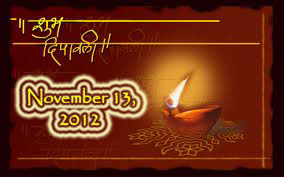
In 2012, Diwali is on Tuesday, November 13

Each year on the dawn of Ammavasya in the month Kartik the festival of Diwali is celebrated.


The festival actually runs for five days, beginning with Dhanteras, although the main celebrations happen on the third day.
       Diwali 2012 
November 13, 2012

11 November, 2012 - Dhanteras
12 November, 2012 - Choti Diwali / Kali Chaudas / Naraka Chaturdashi
13 November, 2012 - Main Deepavali / Baddi Diwali (Lakshmi Puja)
14 November, 2012 - Padwa & Govardhan Puja / Pratipat
15 November, 2012 - Bhai Duj / Bhhaya Dooj / Bhai Beej

0 Diwali | Deepavali | Lakshmi Puja

Diwali, or Dipawali, is India's biggest and most popular and important holiday of the year.

Diwali is celebrated by young and old, rich and poor, throughout the country to dispel darkness and light up their lives. The festival symbolizes unity in diversity as every state celebrates it in its own special way. 

The celebration involves cooking, meeting friends and relatives, taking blessings, performing pujas, buying mettalic objects, gifting, lighting up houses with diyas or decorative lights, decoration of homes, and, definitely, bursting of fire crackers.

Hence the Diwali is also called the "Festival of Lights". Diwali is the name for the festival in North-India. In South-India the festival is called "Deepavali".

 About Diwali
The date of Diwali falls in either in October or November each year, depending on the cycle of the moon.

Over the centuries, Diwali has become a national festival that is enjoyed by most Indians regardless of faith: Hindus, Jains, Buddhists, and Sikhs.

The festival actually runs for five days, beginning with Dhanteras, although the main celebrations happen on the third day.
There have been so many important legends associated with the occasion of Diwali that five days have been accredited for the celebration of Diwali in India with each day holding importance of its own.
The following the festival actually runs for five days, beginning with Dhanteras, although the main celebrations happen on the third day.
    • Dhanteras
    • Choti Diwali
    • Diwali
    • Padwa
    • Bhaiya-Dooj
 Dhanteras / Dhantrayodashi / Dhanwantari Triodasi / Dhan Teyras


The first day of Diwali is known by the name of Dhanteras or Dhantryaodashi, which falls on the thirteenth day of the month of Ashwin. The word 'Dhan' signifies wealth and hence this day holds utmost importance for the business houses and for the rich people's community.

On these days Dhanteras people pray to Goddess Laxmi for prosperity and wealth.

Choti Diwali / Kali Chaudas / Narak Chaturdashi 


The second day of celebration of Diwali in India is also known as of 'Choti Diwali' or 'Naraka Chaturdashi' or 'Kali Chaudas' and is celebrated with the same fervor and enthusiasm as the main day of Diwali.

According to the legend, Lord Kirshna killed the evil daemon Narakasura on this day. People worship Goddess Lakshmi and Lord Rama.

people decorate their homes with clay lamps or diyas and create design patterns called rangoli on the floor using colored powders or sand.

 Diwali / Deepavali / Baddi Diwali / Diwali Mela / Lakshmi Puja


The third day is the actual day of Diwali. Many devotees visit their Temples for worshipping Lakshmi, Goddess of beauty, wealth and wisdom with Laxmi Poojas and also pray to Ganesh, the 'Lord of Beginnings' and 'Remover of Obstacles'. 

When Aarti is performed, oil lamps with a cotton wick are placed on a Puja Thali and offered to the deities, praising the deity by singing wonderful Aarti songs. At night people light up little oil lamps called Diyas, Dipa Lights or Ghee Lamps and place them around their houses. They hang colorful lanterns and fairy lights, enjoying firework displays or blasting firecrackers.

This is the main day of the festival when families gather together for Lakshmi puja, a prayer to Goddess Lakshmi followed by mouth-watering feasts and firework festivities.

Padwa  / Gudi Padwa / Govardhan Puja / Annakoot / Pratipat  


The Fourth day is also called Padwa or Varsha Pratipada that marks the coronation of King Vikramaditya and the starting of the Vikaram-Samvat. Govardhan-Puja is also performed in the North on this day. As per Vishnu-Puran, the people of Gokul used to celebrate a festival in honor of Lord Indra and worshipped him after the end of every monsoon season.

This is the first day of the New Year when friends and relatives visit with gifts and best wishes for the season.

 Bhaiya-Dooj / Yama Dwitiya / Bhai Duj // Bhai Beej


Finally the fifths and last day of Diwali is called 'Bhaiduj' ('Bhai Dooj') also known as 'Yama Dwitiya'.

This day is observed as a symbol of love between sisters and brothers. It is believed that on this day Yamraj -the god of death visited his sister Yami and she put the auspicious tilak on his forehead, they ate, talked and enjoyed together and exchanged special gifts as a token of their love for each other and Yamraj announced that anyone who receives tilak from his sister on this day will be blessed.

On the last day of Diwali, brothers go to his sister’s house who welcomes them with love and a lavish meal.


DEEPAVALI 2012 Copyright © 2011 - |- Template created by Dipak - |- Powered by Android